
Currently
- Closing the loop with attack simulation
Deploying OpenAEV, an open-source adversarial exposure validation platform, alongside our OpenCTI platform. The threats we prioritise in OpenCTI become attack simulations mapped to MITRE ATT&CK, and the results show whether our controls actually detect and block them. That turns detection coverage from an assumption into a measurement that feeds straight back into the intelligence.
- Engineering alongside AI
Using AI coding assistants across my day-to-day engineering, from building integrations and automation pipelines to trying to break them on purpose before they ship. It lets a small team build more, and leaves more time for checking that what we built actually works.
Projects
- adversarial-ai-cti
A vendor-neutral STIX 2.1 representation for prompt injection and jailbreaks, so any STIX platform can ingest them.
- opencti-ai-enrichment
An OpenCTI enrichment connector where the language model proposes entities and relationships and deterministic code decides which ones reach the graph.
- promptlsh
A portable similarity digest for prompt attacks, so reworded jailbreaks correlate instead of reading as unrelated items.
What I’ve built
When I started in 2024, our threat research program was a plan, a MISP server that kept falling over, and a handful of dark web keyword alerts. Today it runs on a production OpenCTI platform in AWS that pulls from a wide range of open-source, dark web and commercial sources, and pushes what it learns into our firewalls and endpoint protection automatically. I did most of the building, with a small team.
Two directions interest me most from here. The first is what happens when security tools start talking to each other. Through the Model Context Protocol, an AI agent can reach a threat intelligence platform, a commercial intelligence service and a security operations platform in the same conversation, and carry a question from “what is this?” all the way to “it’s contained”. I’m exploring how far that chain can run, from intelligence to remediation, with a person still deciding at the points that matter.
The second is AI as a target. Two years ago there was almost no threat intelligence about attacks on AI systems. Now there are feeds, frameworks like MITRE ATLAS and the OWASP Top 10 for LLMs, and a small community working out how to describe a malicious prompt the way we already describe malware. I lead our research on it, and I expect it to become as ordinary a part of a threat program as phishing is today.
Some of this I work on in public. The projects above are tools I’ve released, and the writing below is where I test ideas against real data and report what I find, even when it cuts against my own work.
Writing
A chatbot that invents a fact says it to one person, once. A connector that invents a fact writes it into the graph, where it looks exactly like the true ones. So I let the model read, and took away its ability to decide.
18,479 attacks that beat a language model, all of them prompt injection by construction. That makes the corpus a rare thing: a technique label you already know the answer to. Deriving it from the prompt text recovers 11.4% of it.
Thirty-two bytes is enough to fingerprint a prompt attack so that reworded versions still match, and the fingerprint can be shared without sending the prompt. This is what each size on that curve buys, measured, and where the smallest option is the right call.
About
Since 2024 I’ve been a founding engineer on the threat research team at DISH Network, now part of EchoStar, where I own our threat intelligence platform. That means the engineering decisions behind it: what the platform ingests and how each source is normalized, how intelligence reaches the tools that act on it, what gets automated and what stays with a person, and how we check that it is working. A lot of the job is making it better, one decision at a time: finding the slowest or least trustworthy step, fixing it, and measuring whether the fix held.
It’s an unusual place to do threat intelligence. Most companies have one business to defend. This one runs satellite TV, Hughes satellite internet, a 5G wireless network under Boost Mobile, in-home technology services, and a streaming and content business on top of it all. Every one of those has its own threat actors, its own vendors and its own ways of being attacked. That breadth is the best part of the job and the hardest part of it. There is always more threat than there is time, so the whole program comes down to one skill: deciding what matters to us. That means the actors and techniques aimed at our industries today, and the emerging capabilities that could be aimed at them tomorrow.
Where I came from
I studied instrumentation and control engineering at NIT Trichy, which is mostly the study of sensors, signals and feedback loops. I didn’t expect that to follow me into security, but it did.
I spent three years at Wipro, onboarding organisations onto a global SOC and driving security transformation for enterprise clients. That meant sitting with each team to work out what their systems could log and what they should, building the parsers that turned raw logs into normalised fields a rule could read, and threat modelling each environment to decide which detections it needed first. A SIEM is a wall of sensors, and it is only as good as what it has been wired to read. A threat feed is a sensor too, and its readings decay.
After Wipro, I pursued a master’s in computer science at CU Boulder, with an internship building LLM services along the way, and then moved into the threat intelligence landscape.
- B.Tech Instrumentation and Control Engineering NIT Trichy
- Senior Project Engineer Wipro
SIEM and SOC engineering across a global SOC's transition and transformation.
- MS Computer Science University of Colorado Boulder
- AI Software Engineer Intern Alliant National
LLM-backed backend services for document summarisation and retrieval.
- Security Engineer II DISH Network (EchoStar), Denver
Founding engineer on the threat research team. Threat intelligence platform, intelligence-to-enforcement automation, AI threat research.
What I work with
- Threat intelligence and detection
- OpenCTISTIX/TAXIISigmaYARAOpenAEVOSINTIntsights
- Frameworks
- MITRE ATT&CKMITRE ATLASD3FEND
- SIEM, SOAR and XDR
- Cortex XSIAMPalo Alto XDRIBM QRadarSplunkAzure SentinelElastic StackIBM Resilient SOAR
- Cloud and infrastructure
- AWS (EC2, ALB, Bedrock, Redshift, S3)Microsoft AzureGCPDockerKubernetes
- Languages and automation
- Python (pycti, GraphQL)BashSQLREST APIs
- AI
- Amazon Bedrock Knowledge BasesRetrieval-augmented generationModel Context ProtocolPrompt engineering
- Certification
- AWS Certified Solutions Architect – Associate
How I approach the work
Most security work is reactive by design. An alert fires, a report lands, an indicator shows up in a feed, and someone responds. That work matters, but it means the adversary always moves first. My team works the other way round. We study how the groups that target us build their tools and how their habits shift over time, so we can anticipate the next technique, the next piece of infrastructure or the next campaign before it reaches us.
Over the years, working that way has shaped how I take on any problem. I solve the one in front of me, and I design for the version of it that will show up next. I build things so they can be checked, because a system that measures itself gets better instead of just getting bigger. And I treat research and engineering as one job: the research says where to look, and the engineering makes looking cheap enough to do every day.
AI has changed the engineering half of that. With coding assistants and agents alongside me, the distance between an idea and a working system has shrunk from months to days. I spend the time that frees up on testing more ideas, and on checking that the ones I keep actually work.
That’s what I bring to a team. Not a particular tool, but the habit of getting ahead of the problem, and building the feedback loop that shows whether I did.
What being ahead of the curve means
-
The clock starts before the report.
Intelligence has a shelf life, and much of it is spent waiting: to be validated, written up, published and read. Every hour of that is an hour the adversary gets for free. Being ahead is often less about knowing more than about shortening the distance between knowing something and acting on it.
-
Watch capability, not just activity.
Activity tells you what an adversary did. Capability tells you what they could do next. New tools, new techniques and new services for sale on criminal markets appear well before the campaigns that use them, and that lead time is the whole advantage.
-
AI raises the floor for attackers first.
AI hasn't created a new kind of adversary so much as made the existing ones faster, cheaper and more fluent. An average operator with the right model writes better lures, runs reconnaissance at scale and reworks tooling in hours. The question isn't whether that shift reaches you, but whether you saw it before it did.
-
You can't detect what you never logged.
Onboarding organisations onto a SIEM taught me that the most important conversation happens before any rule is written: sitting with the people who run each system and agreeing what it should record. Nearly every detection gap I've seen traces back to that conversation, or to its absence.
-
Detection is won in normalisation.
A log the SIEM can't parse might as well not exist. Most of the value of a detection program sits in the unglamorous layer that maps every source into the same fields, so a rule written once works everywhere.
-
Coverage should be something you can count.
Once you know what you can see, threat model what you can't: what an attacker could do in this environment that nothing would record or flag. Map both the detections you have and the gaps you've found to a framework like MITRE ATT&CK, and coverage stops being a feeling and becomes a list you can work through.
Off the clock
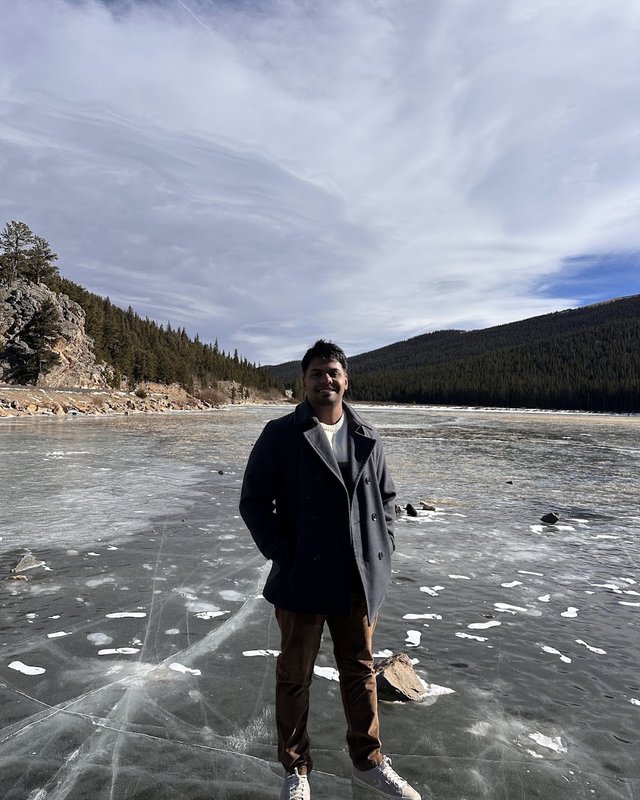
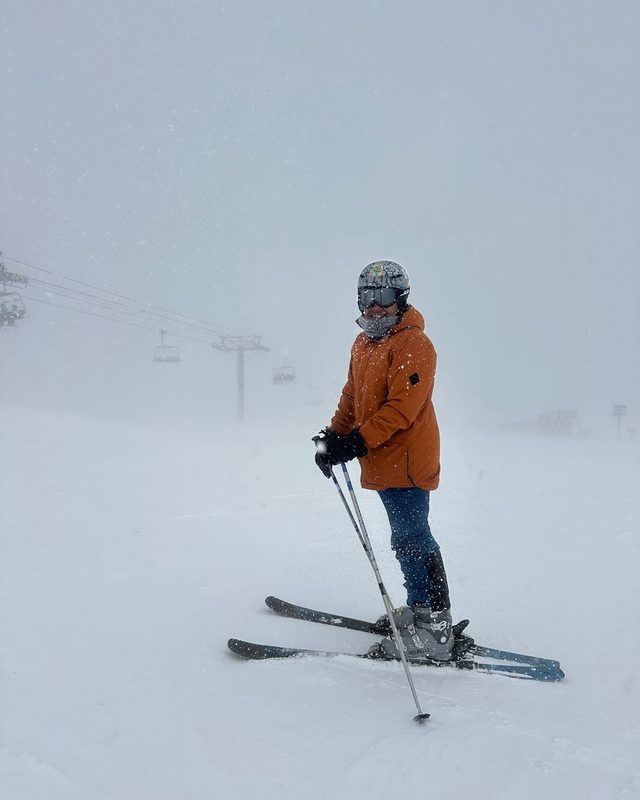
Denver is a good city to land in if you like being outside. Summers are for alpine lakes that take most of a morning to reach. Winters are for skiing, where I’m still working my way onto the black runs, on bluebird days and in whiteouts alike.




Get in touch
I’m glad to talk about threat intelligence platforms, detection engineering and AI security. Email is the fastest way to reach me: ashwinvis98@gmail.com. My résumé is here, and my code is on GitHub. I’m also on LinkedIn.